

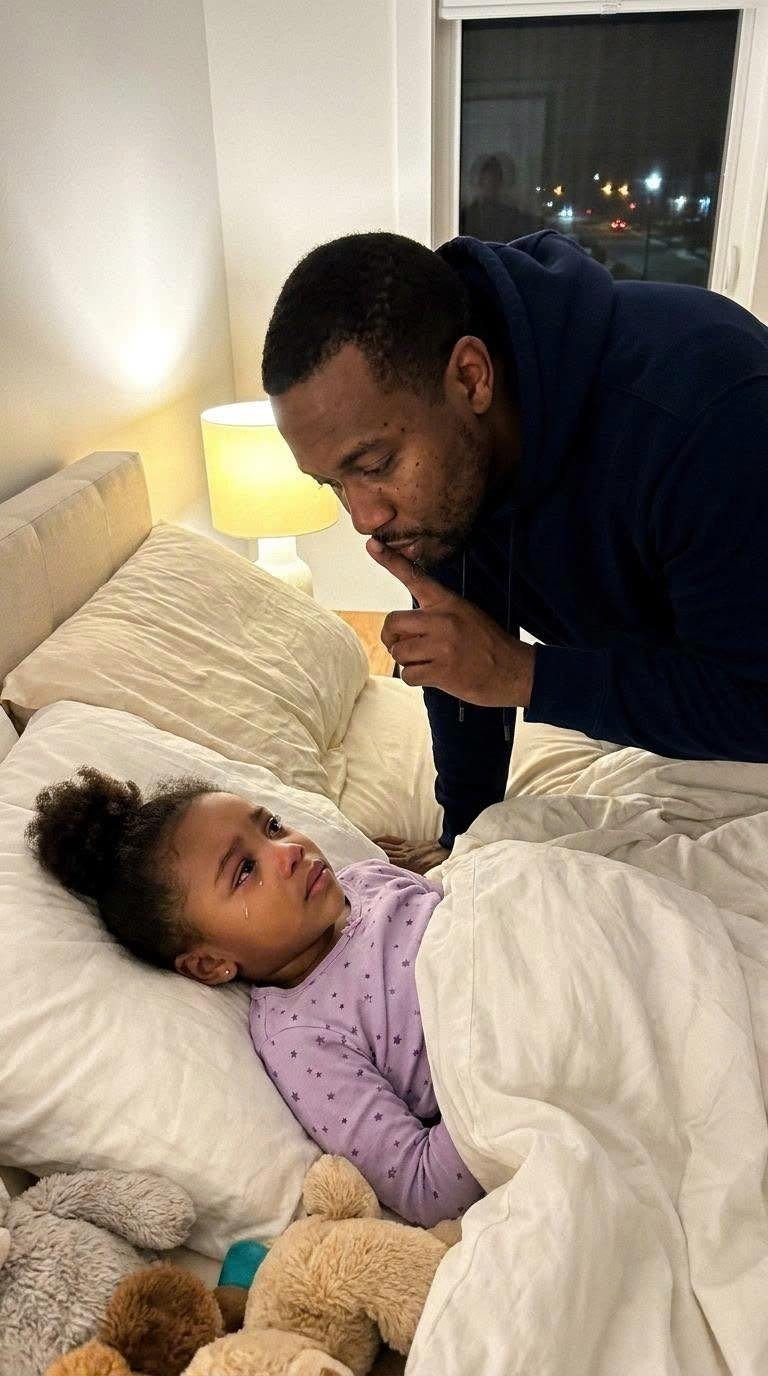
I stayed frozen on my knees, my breath caught in my throat as Sophie slowly lifted the back of her purple star-patterned pajama shirt. The soft fabric peeled away like a curtain on a nightmare I never wanted to witness. What I saw next broke my heart completely—and in that single, shattering instant, it also ignited something primal and unyielding inside me.
Her small back, the one I had kissed a thousand times when she was a baby, the one I had rubbed during fevers and tickled until she dissolved into giggles, was a canvas of violence. Deep purple bruises bloomed across her shoulder blades like storm clouds, spreading downward in ugly, irregular patches. A long, angry red welt ran diagonally from her lower spine up toward her ribs, the exact shape of a door handle pressed with brutal force. There were older marks too—fading yellows and greens overlapping the fresh trauma, telling a story of repeated harm that had been hidden from me for who knows how long. One bruise near her spine looked swollen, as if something deeper was damaged. Her skin, usually so soft and warm, was mottled and tender. She trembled as the cool air touched it.
“Oh God, Sophie...” My voice cracked. I didn’t touch her. I couldn’t. The thought of causing her even one more second of pain made my stomach churn. Tears I hadn’t felt coming spilled down my cheeks. I was a grown man, six-foot-two, built from years of manual labor before I climbed the corporate ladder, and I was sobbing silently in front of my eight-year-old daughter.
She lowered her shirt quickly, as if ashamed, and turned back around. Her big brown eyes, the ones that mirrored her mother’s in happier times, were filled with tears that carved fresh tracks down her cheeks. “Dad... please don’t be mad at Mommy. She said it was my fault. I spilled the juice on the new rug. I didn’t mean to.”
I pulled her gently into my arms—careful, so careful, supporting her without pressing her back—and held her against my chest. She buried her face in my hoodie, her tiny body shaking with silent sobs. The stuffed animals around her bed— the gray elephant she’d named Mr. Flopsy, the teddy bear with the missing ear—seemed to watch us with lifeless pity. The lamp on the nightstand cast a warm, golden glow that felt obscene against the horror of the moment.
“I’m not mad at you, baby. Never at you. You are the bravest girl I know for telling me.” My words were whispers, but inside, a storm was raging. Rage. Guilt. Fear. How had I missed this? I traveled for work—two, sometimes three weeks a month. Video calls every night, sure, but they were surface-level: *How was school? Did you eat your veggies? I love you.* I had trusted Rachel. We had built this life together. Or so I thought.
