

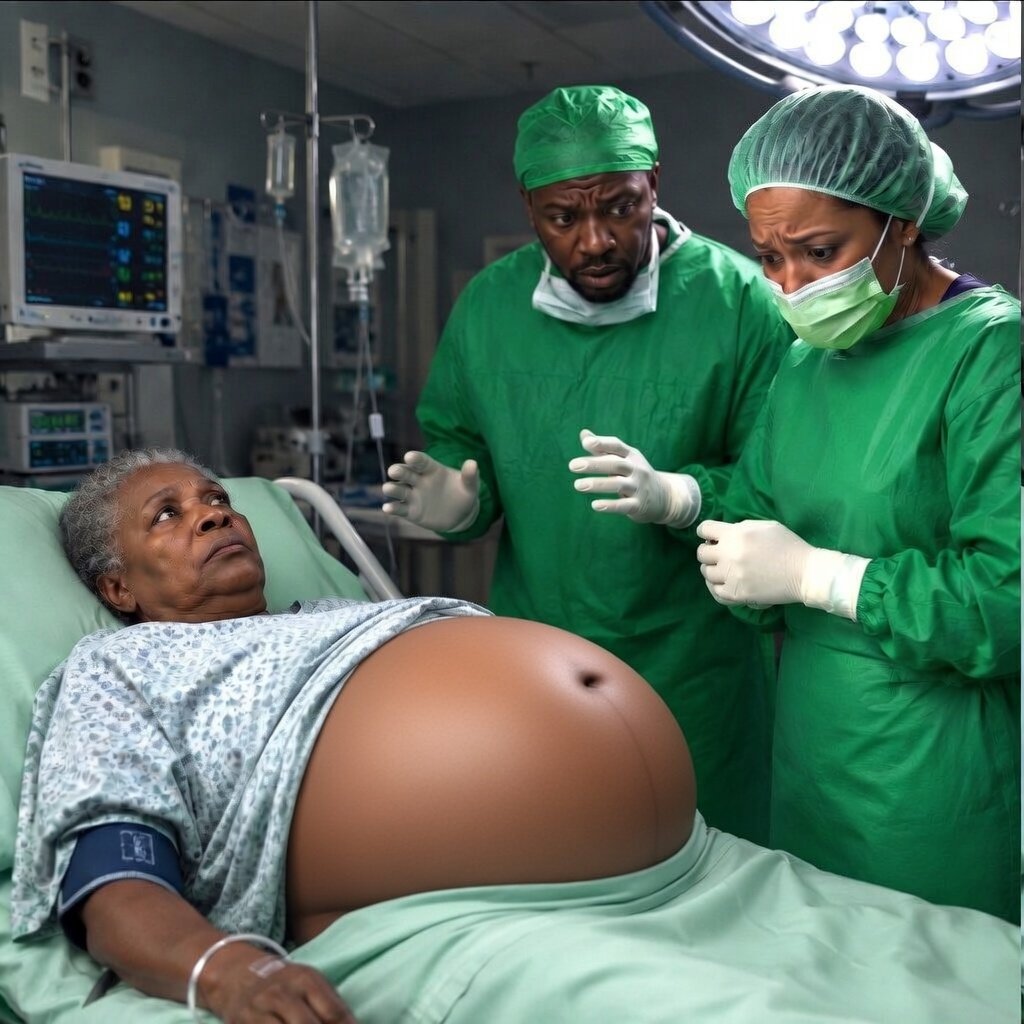
The operation lasted six hours. The tumor removed from her abdomen weighed nearly eighteen kilograms—almost forty pounds. When the surgical team finally lifted it free, several nurses gasped. It was a grotesque, heavy thing, part solid, part cystic, twisted with old blood vessels and calcified areas. Pathology would later confirm it was a borderline malignant mucinous cystadenoma that had been growing undetected for years, perhaps even before her husband’s death.
Margaret woke up in the ICU the next afternoon, her belly suddenly, shockingly flat beneath the bandages. The absence felt like a death.
Aisha was there, red-eyed but trying to smile. “The doctors say you’re going to be okay, Auntie. They got it all. They think it hadn’t spread.”
Margaret turned her face toward the window. Outside, the evening call to prayer drifted across Fes. She listened to the familiar, haunting melody and felt nothing but hollowness.
“I named her,” she said quietly. “Fatima. After my mother.”
Aisha began to cry.
For weeks, Margaret barely spoke. She refused visitors. She stared at the ceiling and replayed every moment of the “pregnancy” in her mind—the joy, the fear, the love that had filled her so completely. The grief was deeper than anything she had felt when Ibrahim died. This loss was of something that had never existed, yet had become more real to her than anything else in her later years.
Dr. Farouk visited often. She was kind, patient, and honest.
“Pseudocyesis is cruel,” she told Margaret one afternoon. “The body and mind conspire together. Hormonal imbalances from the tumor likely fed the delusion. But your desire for this child was so strong that it convinced every part of you. In a strange way, Margaret, you *were* a mother for nine months. You loved with everything you had.”
Margaret looked at the doctor for a long time.
“Then why does it hurt worse than never having the chance at all?”
