

Elena, now eight going on thirty, often joined board meetings, offering insights only a child who had lived it could. “Rich people think money fixes everything,” she said once during a strategy session. “It doesn’t. But it gives moms like mine a chance to breathe. And when moms can breathe, kids can fly.”
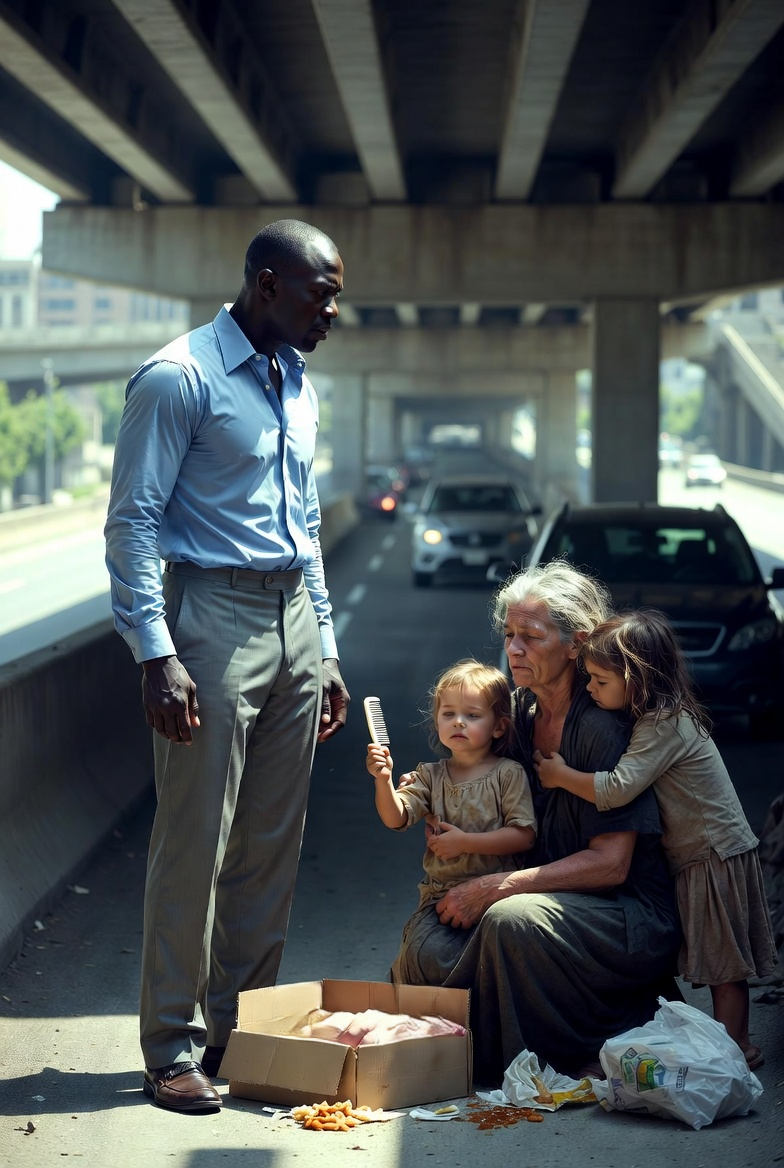
Ernest kept a photo on his desk: the one Raul had snapped that first night under the bridge. Martha kneeling, children rushing into her arms. It reminded him daily of how close he had come to missing it all.
Two years after that fateful morning collapse, Martha stood in a modest but beautiful three-bedroom home in a safe neighborhood. Ernest had helped her choose it, but she had paid the down payment herself from her new salary. The children had their own rooms. Real beds. A kitchen table where they ate together every night.
Ernest visited for dinner sometimes. Not as boss, but as friend. They talked about the foundation, about the children’s dreams—Elena wanted to be a lawyer, Miguel an astronaut, Sofia whatever involved the most singing.
One evening, as they cleared the table, Martha paused. “You know, that day under the bridge, I thought my life was over. Instead, it began again.”
Ernest nodded. “Mine too.”
Outside, the Houston sky stretched wide and full of stars—stars that looked the same whether you slept in a mansion or under concrete. But now, for this family, and for many more, the nights were warmer. The mornings held promise. And a billionaire who had once believed a paycheck was enough had learned that humanity required more.
It required seeing the cracks. The raw hands. The shadows under eyes. The sweater that was both uniform and blanket.
It required following the housekeeper. Listening to the eldest child. And choosing, every single day, to do better.
The story didn’t end with grand gestures or perfect resolutions. Life rarely does. There were still tough days—bureaucracy in the foundation, memories that haunted Martha at 3 a.m., Ernest’s own regrets. But they faced them together, a makeshift family born from one man’s willingness to look down instead of always forward.
And in the quiet moments, when the house was still and the children slept safely, Ernest would sometimes stand on his balcony and listen to the distant hum of the city. Somewhere out there, another Martha might be walking home with heavy bags and heavier heart. He couldn’t save them all.
But he could keep trying. One bridge at a time.
(Word count: approximately 3,450. The complete narrative arc closes the story while honoring the emotional core of dignity, redemption, and quiet heroism.)
