

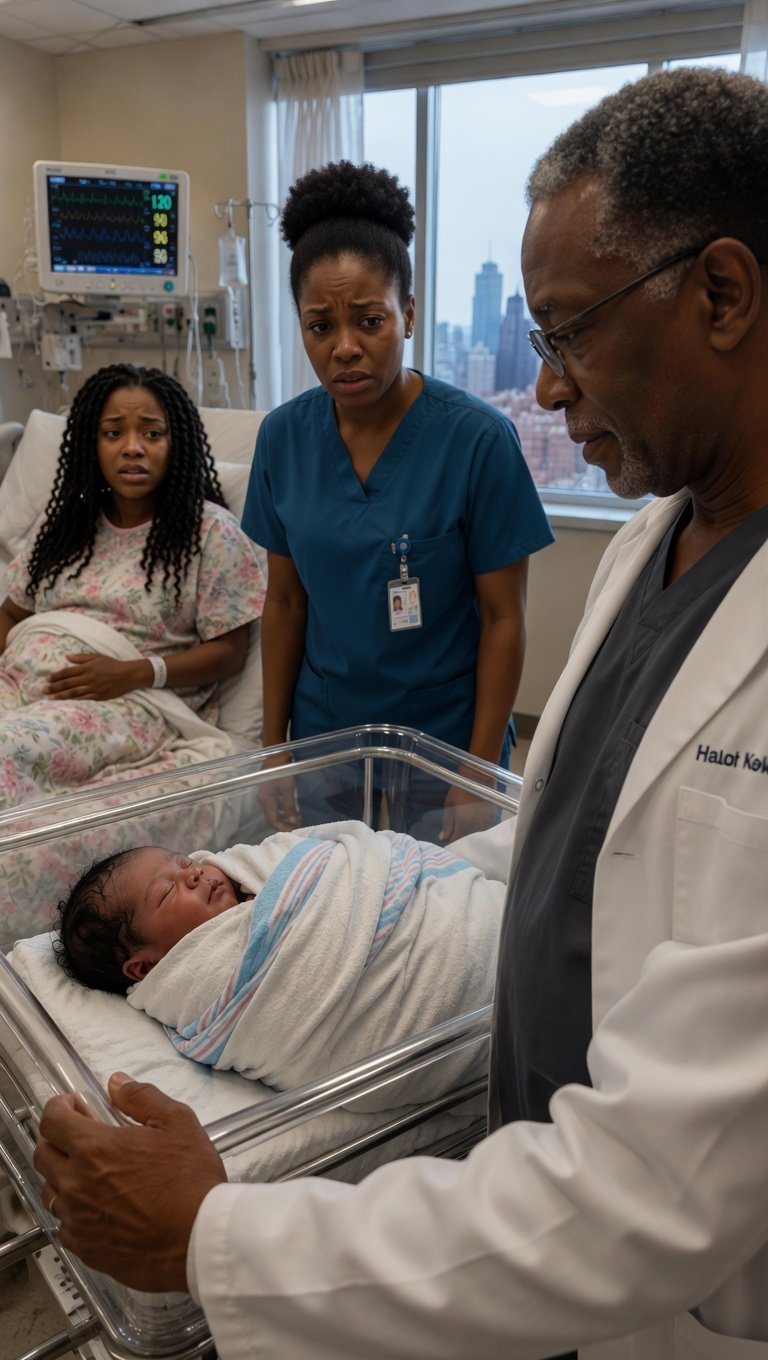
Lucía collapsed against the pillow, tears streaming down her face as the nurse placed the newborn on her chest for a brief moment.
“He’s perfect,” the nurse whispered.
But before Lucía could fully hold her son, the door opened.
Dr. Esteban Vega, the senior attending physician, stepped into the room. He was a tall, distinguished man in his late fifties with salt-and-pepper hair, sharp eyes behind wire-rimmed glasses, and the calm presence that usually brought comfort to frightened patients.
He picked up the chart, reviewed the notes, and walked over to the bassinet where the nurse had just placed the baby.
Then he looked down.
And froze.
The color drained from his face. His hand, steady during thousands of deliveries, began to tremble. His eyes filled with tears.
“Doctor?” the nurse asked, concern creeping into her voice. “Is everything alright?”
Dr. Vega didn’t answer. He stared at the newborn — at the shape of his nose, the curve of his lips, and most telling of all, the small crescent-shaped birthmark just beneath the baby’s left ear.
The same birthmark his own son had.
Lucía, still weak but sensing something was wrong, struggled to sit up.
“What’s wrong with my baby?” she cried, panic rising. “Tell me!”
Dr. Vega swallowed hard. His voice, when it finally came, was thick with emotion.
“Where is the baby’s father?”
