

The “no pants at night” tradition started small but became a tool of control. Sarah began having anxiety attacks. She lost weight. Her friends noticed she was becoming withdrawn, but she was too ashamed to tell them the full truth.
On the night of the incident, after she escaped through the window, she ran barefoot through the compound, thorns cutting her feet. Musa, the Hausa security guard who had always respected her, risked his job to hide her and call for help.
When the police arrived, Chief Okonkwo tried to bribe them on the spot. But one of the officers was a woman who had seen too many cases like this. She refused.
The trial was brutal. Sarah had to relive every humiliating detail in open court. Emeka’s family hired the best lawyers, but public pressure and social media outrage turned the tide.
After the verdict, Sarah received hundreds of messages from other women who had suffered similar abuses in the name of tradition. She used her settlement money to open safe houses in Enugu, Lagos, and Abuja.
In her speeches, she often said:
“They called it tradition. I call it oppression. Never let anyone use culture as a weapon to break you.”
Today, Sarah is 29 years old. She is studying law part-time. She has a new partner — a kind, respectful man who supports her work. And every night, she sleeps with her pants on, because her body belongs to her alone.
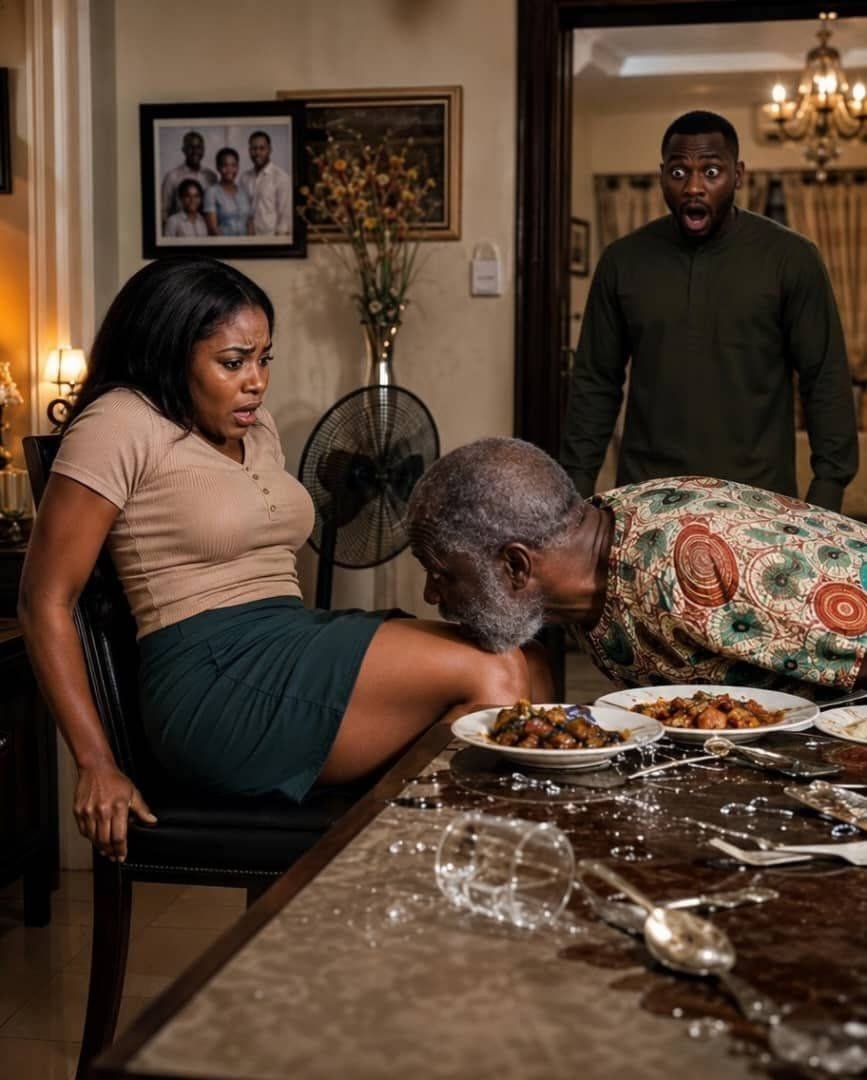
The photo of that horrific dining table moment still circulates online sometimes. But now, instead of shame, it represents her victory.
She survived.
She fought back.
And she won.
---
