

It was forty acres of red Texas soil that had been in my family since my great-grandfather bought it after sharecropping his way out of Alabama in the 1920s. It was the orchard where Thomas and I picked peaches on our first date. The pasture where Emily learned to ride horses. The white farmhouse my late husband rebuilt board by board after the tornado in 2005. Every acre carried sweat, prayers, and the bones of my ancestors.
And Carter Whitmore wanted it all.
---
It hadn’t always been this way.
Carter had seemed charming at first—successful real estate developer, smooth talker, sharp dresser. He swept Emily off her feet with trips to Houston and promises of a life beyond “that old farm.” I had reservations, but I wanted my daughter happy. Thomas had been gone eight years, and Emily was all I had left.
But once the engagement ring was on her finger, the mask slipped.
He started making comments about how the farm was “holding us back.” How a highway extension was coming through and the land would be worth millions if “handled correctly.” How a “modern couple” didn’t need forty acres of dirt when they could have cash.
I refused to sell.
Then the demands began. First subtle, then aggressive. He wanted me to sign it over as a “wedding gift.” When I laughed in his face during a family dinner three months ago, he called me selfish. When I stood firm, he began working on Emily—guilt-tripping her about providing for their future children, about how I was “choosing dirt over family.”
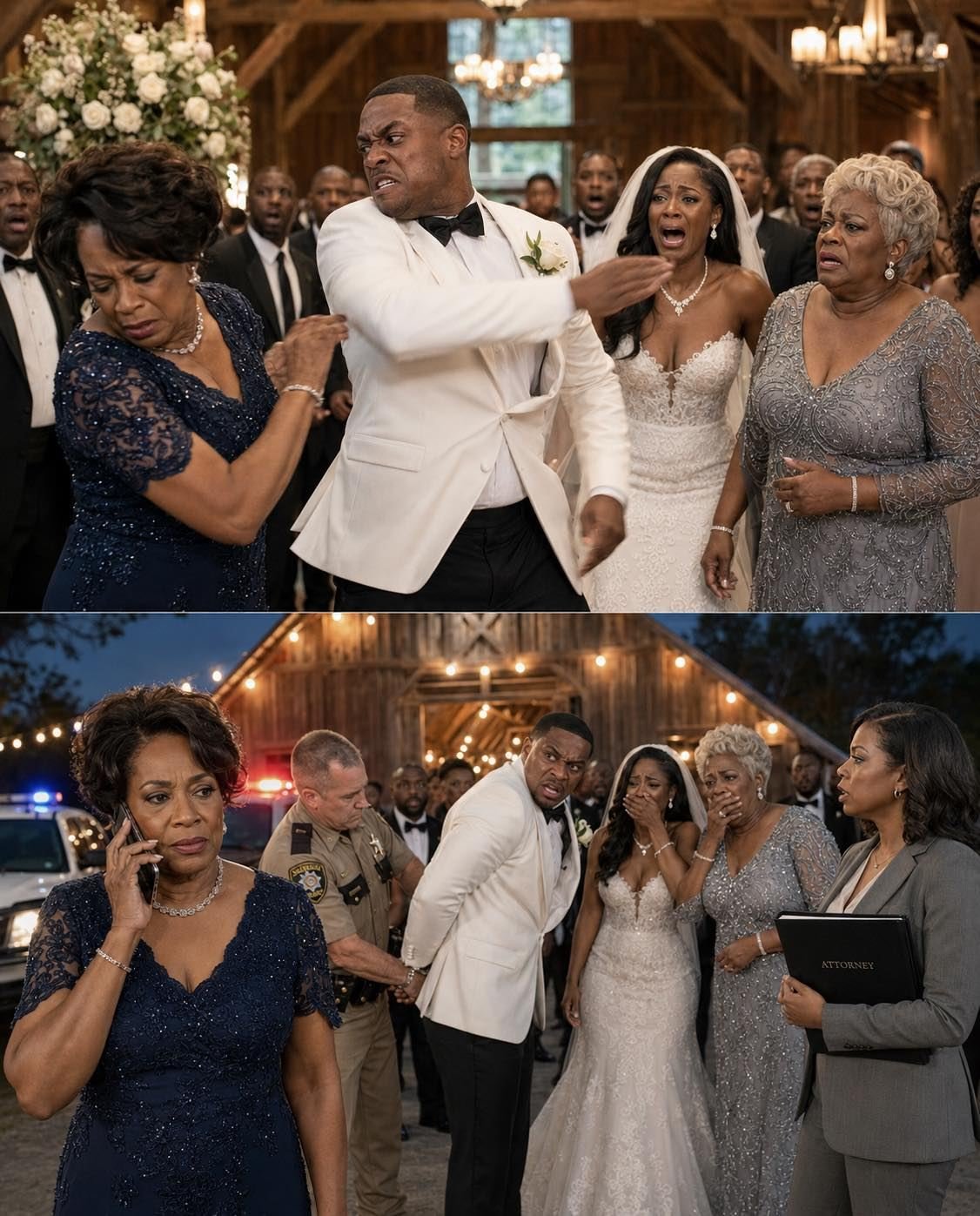
Tonight, he had decided to take it publicly.
I straightened my spine, feeling every one of my sixty-two years and every lesson my grandmother taught me about standing on sacred ground.
“I promised my daughter love,” I said clearly, my voice carrying through the barn. “Not the keys to four generations of blood and sweat. You will not bully me out of my inheritance in front of God and everybody.”
